The ADHD Burnout Cycle: Why You Keep Pushing Until You Hit a Wall
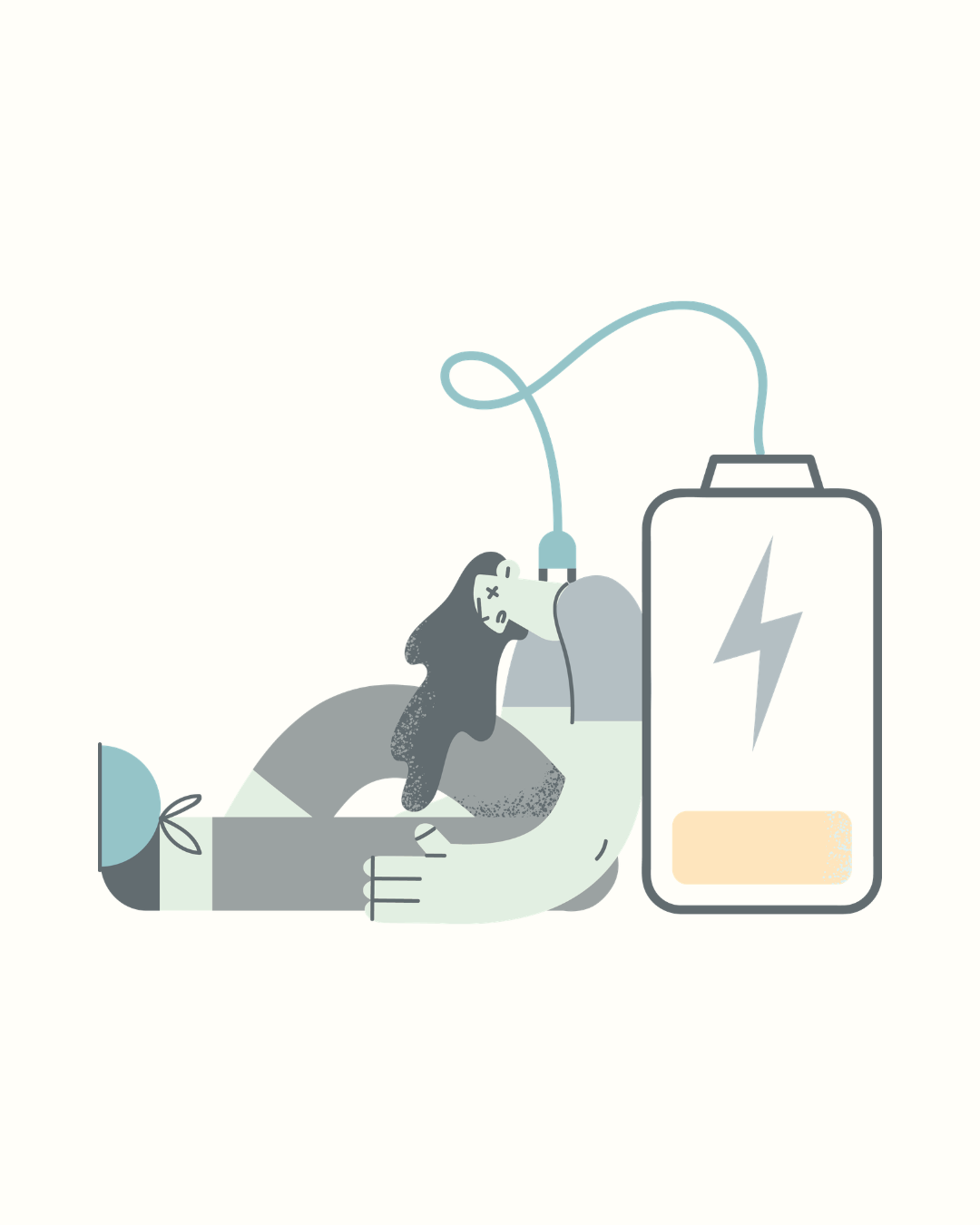
Have you ever felt incredibly motivated to take on a new project, make a change in your life, or finally get organized, only to find yourself overwhelmed, exhausted, and unable to complete even the simplest tasks a few weeks later? Maybe you push yourself to catch up on everything, sacrifice sleep to meet deadlines, or rely on a last-minute burst of motivation to get things done. Then, once the pressure passes, you crash. Everyday responsibilities suddenly feel impossible, and you wonder why you cannot seem to keep up.
For people with attention-deficit/hyperactivity disorder (ADHD), this experience may feel frustratingly familiar. It is often described as the ADHD burnout cycle: a recurring pattern of motivation, overexertion, overwhelm, exhaustion, and guilt that can make daily life feel like an endless attempt to catch up.
ADHD burnout is not an official medical diagnosis, but the experience is worth taking seriously. Research has linked ADHD-related executive functioning challenges with workplace burnout, and many people with ADHD describe the exhaustion that can come from trying to manage everyday responsibilities in environments that do not accommodate their needs. Understanding this cycle can help us move away from self-blame and toward strategies that support our actual needs.
Understanding the ADHD Burnout Cycle
Although everyone's experience is different, the cycle often follows a recognizable pattern.
1. Motivation, excitement, and the fresh start
The cycle may begin with a burst of motivation. You discover a new interest, start a project, decide to reorganize your life, or feel determined to catch up on everything you have been putting off.
The possibilities feel exciting, and you may envision how much you can accomplish. You make plans, create lists, and commit to doing things differently this time.
For some people with ADHD, interest, novelty, urgency, and immediate rewards can strongly influence attention and motivation. The challenge is that initial enthusiasm does not always translate into consistent energy or follow-through over time.
You might take on more than you realistically have the time or capacity to manage. When motivation eventually changes, the expectations you created during that initial burst can remain.
2. Executive functioning challenges begin to interfere
As the excitement settles, the practical demands of the task become more apparent. You have to organize materials, prioritize steps, manage your time, sustain attention, remember details, and follow through even when the task is no longer interesting.
These are areas in which ADHD can create difficulties. The National Institute of Mental Health identifies challenges with organization, time management, procrastination, remembering daily tasks, and completing projects among common ADHD-related difficulties in adults.
A task that seems straightforward to someone else may require considerable mental effort. You might know exactly what needs to be done but struggle to initiate it. You may jump between tasks, become distracted, or spend so much time figuring out where to begin that little progress happens.
This can be especially discouraging when you genuinely care about the outcome.
3. Overwhelm leads to overcompensation
As unfinished tasks accumulate, stress begins to build. You may worry about disappointing others, missing deadlines, falling behind, or being perceived as unreliable.
Instead of adjusting your expectations, you might respond by pushing yourself harder.
Perhaps you stay up late to finish everything, skip meals to keep working, agree to additional responsibilities, or spend your entire weekend trying to catch up. You may depend on urgency and pressure to help you focus, telling yourself that you will rest once everything is finished.
Unfortunately, there will almost always be something else to do.
Research published in the journal Frontiers in Psychology found that executive functioning difficulties, particularly those involving time management and organization and problem-solving, helped explain the relationship between ADHD and job burnout among employees.
When daily responsibilities consistently require more effort than your available resources can sustain, overcompensation may temporarily help you keep up, but it can also contribute to exhaustion.
4. Exhaustion, shutdown, or ADHD paralysis
Eventually, the strategy of pushing harder stops working.
You may feel mentally foggy, emotionally drained, irritable, unmotivated, or unable to make even minor decisions. Tasks that were once manageable begin to feel enormous. You might avoid emails, postpone appointments, neglect household responsibilities, or struggle to respond to messages.
Sometimes this is described as ADHD paralysis: feeling stuck or unable to initiate action despite wanting to move forward. It is a commonly used term, not a formal clinical diagnosis.
At this stage, you may interpret your difficulty functioning as evidence that you are lazy, irresponsible, or incapable. In reality, exhaustion and accumulated stress can make the executive functioning skills you already struggle with even harder to access.
Your body and mind may be signaling that the current approach is no longer sustainable.
5. Guilt, shame, and self-criticism
After hitting a wall, you may become painfully aware of everything left unfinished.
You might think, “Why can't I just do what I need to do?” or “I was doing so well, and now I'm right back where I started.”
You may compare yourself to people who seem to manage their responsibilities with ease. You might feel embarrassed about missed deadlines, unfinished projects, or a home that does not look the way you want it to.
These feelings can create another layer of stress. Rather than seeing exhaustion as information about your needs, you may use shame as motivation to try harder next time.
But shame rarely creates a sustainable system. It can make tasks feel more emotionally threatening, increase avoidance, and reinforce the belief that you must work harder than everyone else to be enough.
6. Recovery, a new burst of motivation, and the cycle begins again
Eventually, you may get some rest, catch up on a few responsibilities, or experience a new wave of motivation. You feel hopeful again. You make a fresh plan, set ambitious goals, and promise yourself that this time will be different.
However, if the underlying patterns remain unchanged, the cycle can repeat.
The problem is not necessarily a lack of motivation or a failure to try hard enough. It may be that the system you are relying on requires you to operate at an unsustainable level to meet your daily demands.
Breaking the cycle involves more than finding a better planner or trying to become more disciplined. It requires learning how to work with your brain, recognize your limits, and create systems that do not depend on reaching exhaustion before you are allowed to rest.
Why the ADHD Burnout Cycle Can Be So Difficult to Break
Several factors can contribute to this pattern.
Executive functioning demands. Planning, prioritizing, remembering, starting tasks, and managing time can require significant effort. When many responsibilities compete for attention, the cumulative load can become overwhelming.
Relying on urgency to get things done. Deadlines and consequences may provide the pressure needed to initiate or sustain a task. However, repeatedly depending on last-minute urgency can interfere with sleep, recovery, and consistency.
Perfectionism and people-pleasing. Some people develop high expectations for themselves to compensate for past criticism or difficulties. They may overcommit, struggle to say no, or feel that doing something adequately is not enough.
Difficulty recognizing limits. It can be hard to estimate how long something will take, notice early signs of fatigue, or account for the mental effort involved in switching between responsibilities.
Chronic stress and emotional overwhelm. Stress can make attention, planning, decision-making, and emotional regulation more difficult. This can create a feedback loop in which ADHD-related challenges increase stress, and stress makes those challenges harder to manage.
Insufficient support. Trying to manage ADHD without appropriate treatment, practical accommodations, or understanding support can leave someone relying heavily on willpower alone.
These factors do not affect everyone with ADHD in the same way, and burnout can have many contributing causes. Sleep difficulties, depression, anxiety, other health conditions, and demanding life circumstances can also play a role.
How to Begin Breaking the ADHD Burnout Cycle
The goal is not to become endlessly productive. It is to create a life in which your responsibilities, expectations, and available energy are more sustainable.
1. Stop using exhaustion as your measure of success
If you routinely finish your responsibilities only by sacrificing sleep, skipping meals, or eliminating all time for yourself, your system may be asking too much of you.
Instead of asking, “How much can I get done today?” consider asking, “What can I realistically do today while still taking care of myself?”
This may mean completing fewer tasks, leaving some things for tomorrow, or asking for help. Sustainable progress may look less impressive in a single afternoon, but it is more likely to be repeatable.
2. Make tasks smaller and easier to start
Large, vague tasks can be difficult to initiate. Breaking them into concrete steps can reduce the mental effort required to begin.
Instead of “clean the house,” try “put the dishes in the dishwasher for five minutes.” Instead of “finish the project,” try “open the document and write three bullet points.”
You do not need to complete the entire task to make meaningful progress. Sometimes the goal is simply to make the next step accessible.
External supports such as visual reminders, calendars, written checklists, timers, and body doubling (working alongside another person) may also help reduce the burden of remembering and initiating tasks.
3. Build rest into your routine before you need it
Rest should not be something you earn only after completing every responsibility. Because daily demands are ongoing, waiting until everything is finished may mean never fully recovering.
Schedule breaks, protect sleep, eat regularly, and make room for activities that are enjoyable without needing to be productive. Notice whether you are consistently operating beyond your capacity.
Rest is not a reward for doing enough. It is part of what allows you to function.
4. Plan for your actual capacity, not your ideal capacity
When you feel motivated, it is easy to plan as though you will have the same energy, attention, and availability every day.
Instead, leave room for unexpected demands, transitions, difficult days, and recovery. Consider what a realistic week looks like rather than what you could accomplish under perfect conditions.
A useful question is: “Could I maintain this routine during an average week, or does it only work when everything goes right?”
If a plan depends on constant motivation, it may need to be simplified.
5. Challenge the guilt that keeps you overworking
Notice the thoughts that appear when you slow down. Do you believe that resting makes you lazy? That saying no makes you unreliable? That you must work twice as hard to make up for your struggles?
Try replacing these judgments with more balanced questions:
What would I say to a friend who was struggling in the same way?
Am I avoiding this task because I do not care, or because I feel overwhelmed and do not know where to begin?
What expectations am I holding myself to, and are they realistic?
Can I be responsible without expecting myself to be limitless?
Self-compassion does not mean avoiding responsibility. It means responding to difficulties in a way that makes problem-solving possible rather than adding shame to an already stressful situation.
6. Seek support that addresses the underlying challenges
ADHD treatment can include medication, psychotherapy, behavioral interventions, and practical supports, depending on the person's needs. The National Institute of Mental Health notes that treatment can help reduce symptoms and improve daily functioning.
A therapist familiar with ADHD may help you explore perfectionism, shame, emotional regulation, overcommitment, and the patterns that keep you stuck in cycles of overworking and avoidance. ADHD-informed coaching or organizational support may help with planning, routines, and accountability. Workplace or educational accommodations may also reduce unnecessary barriers.
If exhaustion is persistent, severe, or interfering significantly with daily life, consider speaking with a healthcare professional. It is important to assess whether ADHD-related difficulties are contributing to the problem or whether depression, anxiety, sleep issues, or another concern also needs attention.
You do not have to wait until you reach a breaking point to deserve support.
You Do Not Have to Earn Your Rest
One of the most important shifts in breaking the ADHD burnout cycle is recognizing that your worth is not measured by how much you accomplish or how hard you push yourself.
You can be capable and still need support. You can care deeply about your responsibilities and still struggle to complete them. You can be ambitious without committing to everything, and you can take a break without having finished every item on your list.
If you recognize yourself in this cycle, try approaching that recognition with curiosity rather than criticism. Instead of asking what is wrong with you, ask what has become unsustainable, what support is missing, and what could make daily life more manageable.
You do not need to overhaul your entire life overnight. Start with one smaller expectation, one practical support, or one moment of rest that you allow yourself without guilt.
The goal is not to become better at pushing through burnout. It is to build a life that does not repeatedly require you to burn out in the first place.
References
1. National Institute of Mental Health (NIMH). ADHD in Adults: 4 Things to Know. Information about adult ADHD symptoms, daily functioning, and treatment options.
2. Centers for Disease Control and Prevention (CDC). ADHD in Adults. An overview of adult ADHD, its impact on everyday life, and available treatment approaches.
3. Frontiers in Psychology. Executive function deficits mediate the relationship between employees’ ADHD and job burnout. A research study examining how executive functioning difficulties may contribute to occupational burnout among adults with ADHD.
4. Children and Adults with Attention-Deficit/Hyperactivity Disorder (CHADD). Managing ADHD Can Begin with Stress Awareness. Explores the relationship between stress, ADHD symptoms, executive functioning, and emotional regulation.
5. Attention Deficit Disorder Association (ADDA). ADHD Burnout: Cycle, Symptoms, and Causes. A practical overview of the commonly described ADHD burnout cycle and strategies for managing it.